
 Magyar
 English
Home · SME Blog · AI chatbot series
TD-AI & Marketing · Debrecen, Hajdú-Bihar, Hungary-wide
AI Chatbot for SMEs Part 2: Path to Launch — FAQ, GDPR, Human Handoff, Metrics (2026)
Chatbot series · Part 2 — rollout · ← Part 1: 7 benefits · Part 3: operations & ROI →
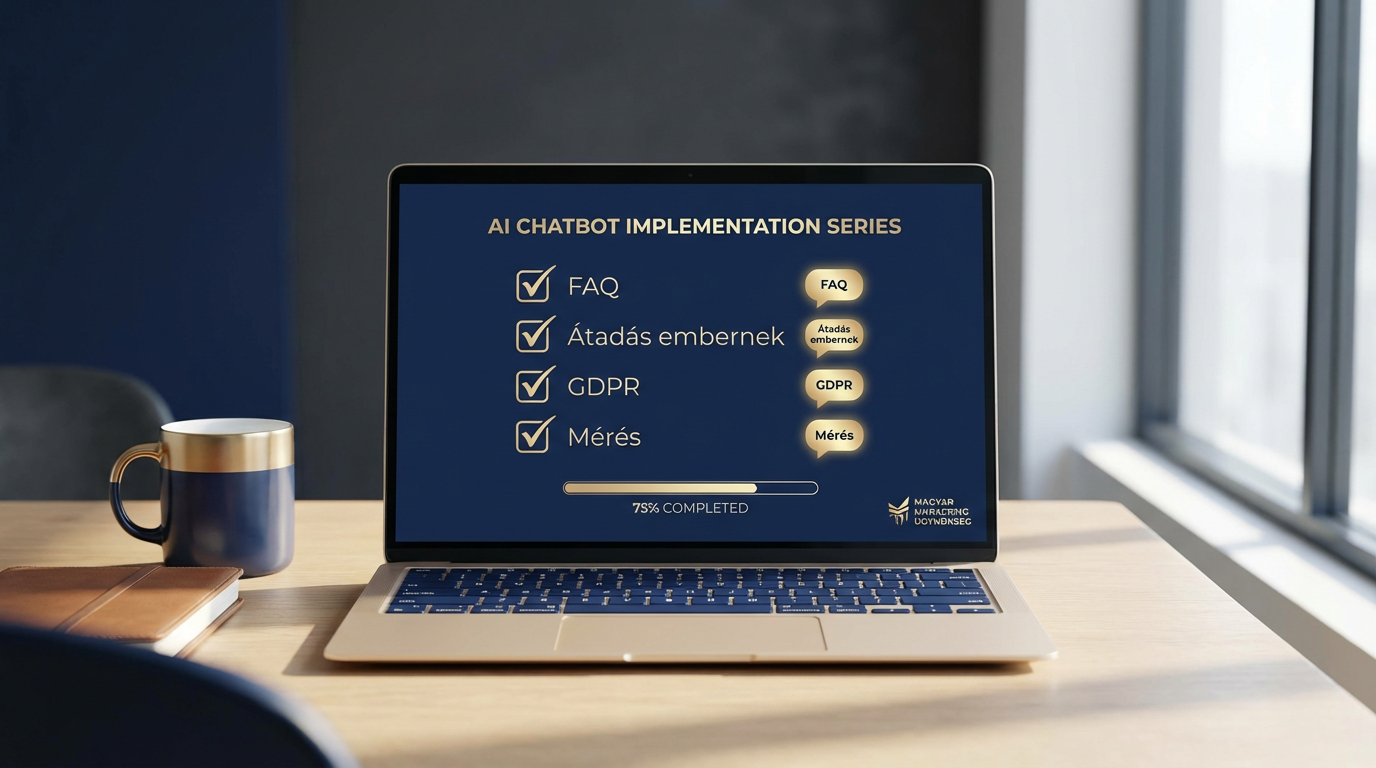
In part one you saw why an AI chatbot pays off for a Hungarian SME. In this instalment we cover how to start so the project doesn’t fall apart in week two — from FAQ to measurement. Implementation support is part of our services; for a Debrecen-focused overview see AI chatbot for SMEs.
1. Starting point: a 10-second goal in one sentence
Before you write a single line for the bot, state in one sentence: what should the visitor do? (e.g. book a time, request a callback, ask for a quote, buy a package.)
Without that, the chatbot may sound polished — and lead nowhere. That sentence is your compass: every piece of knowledge should align with it.
2. FAQ + “no-go zone”: what the bot must not promise
Build a short list of topics where it can give clear answers (opening hours, price bands, service area, warranty, lead times) and another list where a human is required (custom pricing, legal status, medical risk, complaints, contract fine print).
The bot should be confident in plain-language explanation but must not play lawyer, accountant or doctor unless you are authorised to. The no-go zone protects your brand and reduces misuse risk.
3. Knowledge base: don’t paste your whole site as a wall of text
Best practice: short, verifiable chunks (mini sections) with links to detail. Easier to update and fewer “hallucinations” (the model sounding sure while wrong).
- One page = one decision (e.g. “Which package do I need?”).
- Every claim: source / internal link on the website.
- Ten minutes weekly: what did people ask that the bot answered badly? → expand the knowledge base.
4. GDPR and data: SME essentials that actually matter
This isn’t legal advice — but from a marketing lens these three tripwires are common:
- Transparency: why you collect data (e.g. callback), how long you keep it, who can access it.
- Legal basis: for many enquiries consent plus a clear checkbox pattern is the practical route.
- Erasure / export: if someone steps back, you need a process (even manual at first).
If the chatbot forwards a form (e.g. to Formspree or a CRM), apply the same standards as a website form — no “grey zone” because the UI is conversational.
5. Human handoff: when should the phone ring?
Good systems don’t pretend the bot is human. Good systems hand off fast when:
- complaint / dissatisfaction signals appear;
- amounts, contracts or deadlines need precision;
- the user says they want to speak to someone.
Set a clear SLA for yourself: e.g. callback within fifteen minutes in business hours — and publish it. The bot can keep the conversation in a reassuring mode until then.
6. Measurement: four numbers worth checking weekly
- Conversation count — is there demand at all?
- Goal-action rate — how many chats became a lead, call or booking.
- Average response time — does the bot deliver the “instant” promise.
- Handoff share — too high or too low? Wrong questions or escalation rules?
If you track only one metric: goal-action rate. Everything else can align to that.
7. Minimum viable launch in fourteen days
This isn’t enterprise project theatre — it’s SME reality you can execute with a small team.
- Days 1–2: goal + FAQ outline + no-go zone.
- Days 3–7: knowledge base v1 + ten real Q&As from customers or support.
- Days 8–14: handoff + measurement + tuning (tone, length, “don’t nag” rules).
Next step
If you prefer not to experiment alone for months, request a free consultation: we review your website and acquisition flow and pinpoint where a chatbot would move the needle most in your market.
Contact:
- Email: admin@tdaimarketing.com
- Phone: +36 30 352 7975
- Web: tdaimarketing.hu
Tóth Dániel István — TD-AI & Marketing Agency, Debrecen
Keywords (SEO): AI chatbot rollout SME, chatbot FAQ, GDPR chatbot, chatbot analytics, human handoff chatbot, customer service automation, AI assistant website, marketing agency Debrecen.